Two tourist sites are being studied to reduce light pollution
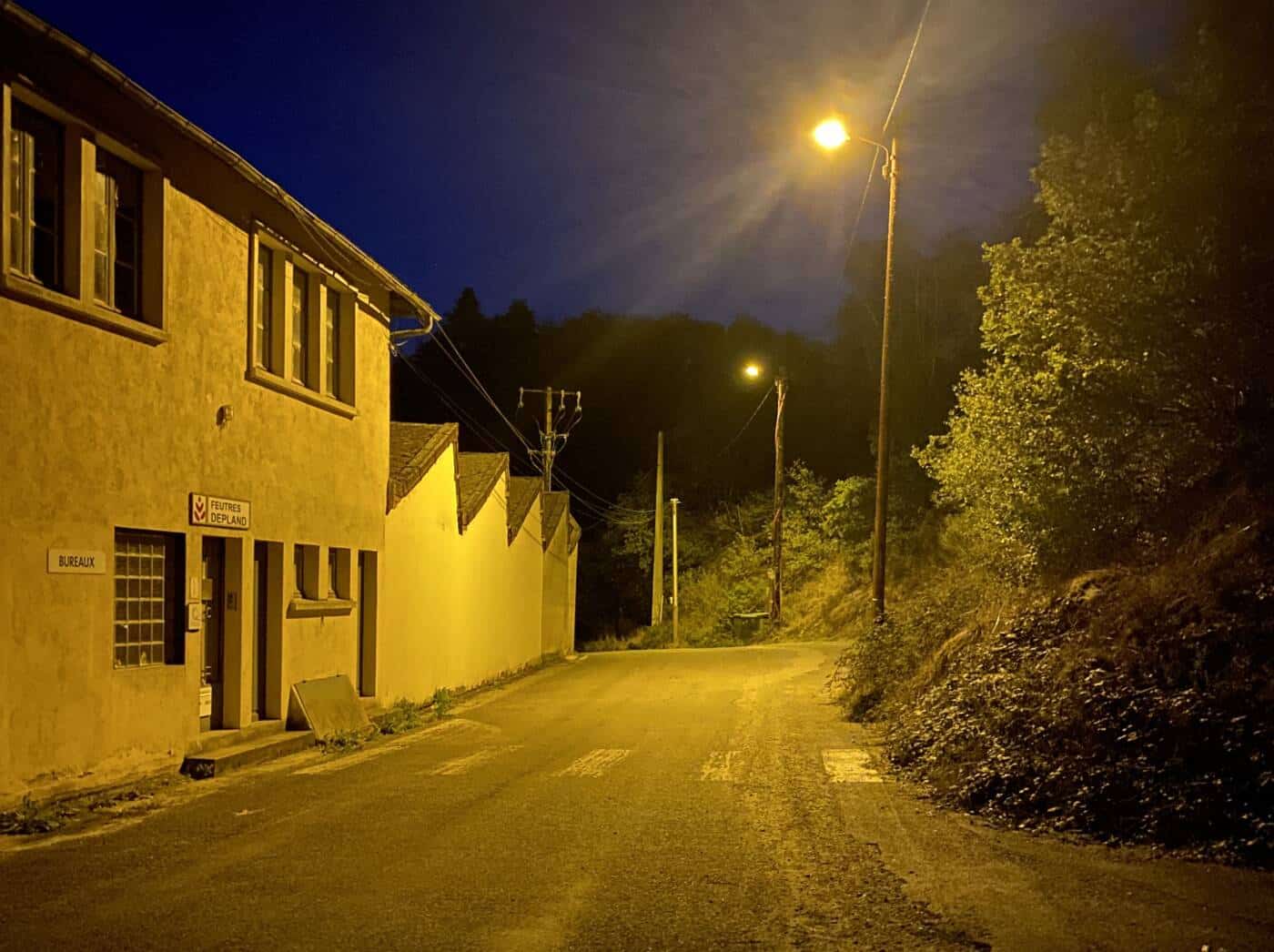
On Tuesday, September 15th, the Périgord-Limousin Regional Natural Park was in Saint-Junien to assist with the lighting assessment of the Corot site. This is an essential preliminary step to ultimately reduce light pollution at this natural and tourist site.
Nighttime lighting: a form of pollution with multiple consequences
Light pollution is the result of excessive or poorly calibrated artificial lighting. While the disappearance or degradation of the starry sky is one of the main consequences of this pollution, the negative effects are felt not only in ecosystems , but also in flora and fauna, and even in human health . Indeed, excessive light can disrupt the circadian rhythm (the alternation of day and night) and, consequently, affect the functioning of the endocrine system.
Like many regions, Périgord-Limousin has been committed to this issue for several years, supporting measures to switch off or reduce public lighting. In 2025, thanks to the support of the Regional Natural Park, 51 municipalities obtained the "Starry Towns and Villages" label , thus enabling the region as a whole to obtain the "Territory of Starry Towns and Villages" label.
A new collective project
To continue the approach already underway, the Park is contributing this year to a new project, aimed at mobilizing tourism stakeholders in the effort to reduce light pollution.
The project is being implemented collaboratively , with the participation of seven other parks in the Massif Central: Cévennes National Park, Livradois-Forez Regional Natural Park, Auvergne Volcanoes Regional Natural Park, Causses du Quercy Regional Natural Park, Haut Languedoc Regional Natural Park, Millevaches en Limousin Regional Natural Park, and Monts d'Ardèche Regional Natural Park. IPAMAC ( Inter-Park Association of the Massif Central ) is coordinating the initiative.
Each volunteer territory contributes to the project by proposing one or two tourist or heritage sites to be studied: castles, campsites, caves, leisure centers… The diversity of sites and their configurations should ultimately allow the publication of a synthetic reference guide , to extend the approach to other tourist sites and in other territories.
Two sites under consideration in Périgord-Limousin
In the Périgord-Limousin region, the Park has selected two sites managed by local authorities.
In Saint-Junien, the gateway town to the Regional Natural Park, the "Corot site" was a natural choice. This steep-sided section of the Glane River owes its name to the painter Camille Corot, who drew his inspiration from the surrounding nature. Today, it serves as the starting point for numerous walks. On this site, a former factory building houses one of the largest bat colonies in the Haute-Vienne department. However, the species present are sensitive to light pollution, which degrades the quality of their foraging areas, particularly during the rearing and learning phases of their young.
In the commune of Bussière-Galant, the Hermeline area offers an ideal setting for study , given its diverse uses, including nighttime activities: a swimming lake, pétanque courts, a football and rugby pitch, and a campsite. All of this is located within the Natura 2000 site "Haute Dronne hydrographic network," managed by the Regional Natural Park. This area is one of the Park's major tourist attractions.
Following the diagnosis carried out on these sites, measures to reduce lighting will be recommended in the coming months.
The work carried out at these two tourist sites is just the starting point of a broader initiative to mobilize tourism stakeholders in preserving the night environment. Because light doesn't stop at the boundaries of a site; it spreads. Therefore, collective action is needed across the entire region to preserve a natural treasure that is itself a true tourist asset: the night and its starry sky.
 ©Light Grapefruit – Stephane DELORME