Animators and moors
On Tuesday, September 22nd, in Champagnac-la-Rivière, about fifteen local stakeholders participated in the networking day organized by the Périgord-Limousin Regional Natural Park. The program focused on discovering a landscape that is now largely hidden in the area: the heathlands.
A network serving education within the territory
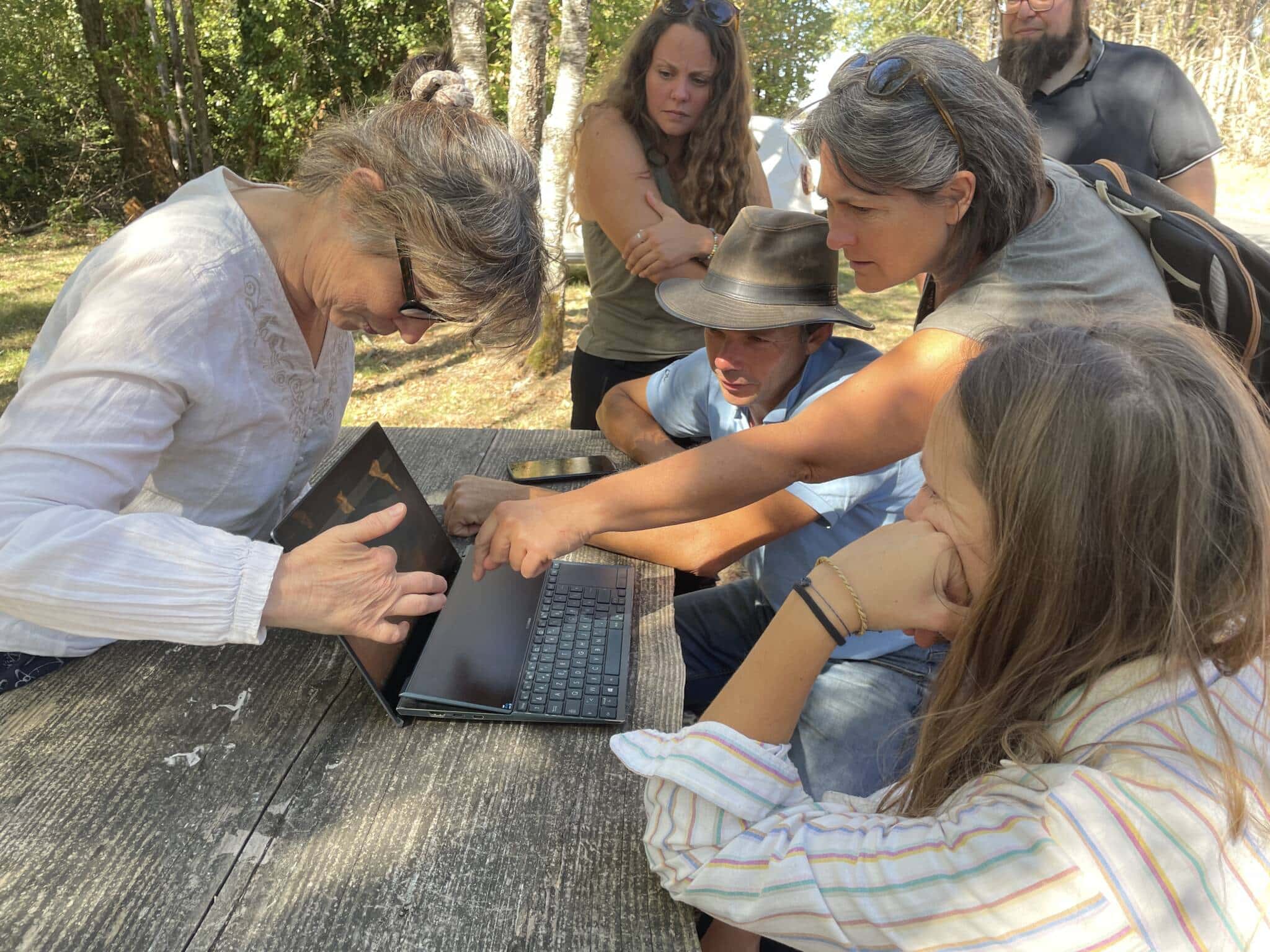
It has now become a regular event for those involved in education in the Périgord-Limousin region. Five times a year, the Park invites members of the network to meet for a day of networking and training . While the "nature educators" form the core of the network, it is open to anyone who regularly interacts with the public. This diversity fosters a vibrant dynamic and allows for the regular integration of new participants with varied backgrounds.
Thanks to this diversity, the network's meetings provide an opportunity to forge partnerships , learn from each other's experiences, and stay informed about the latest news from the various organizations. For the Park, it's also a chance to familiarize these stakeholders with local issues , enabling them to adapt their educational approaches and public outreach. Finally, these days offer a valuable opportunity to foster exchanges between park educators and staff.
Each meeting has its own theme. After water, crafts or birds, this time it was a very specific place in the territory that was at the heart of the discussions: a heathland that is part of the regional nature reserve of the Atlantic heathland network of the Périgord-Limousin Regional Natural Park.
The moors: a multifaceted ecosystem
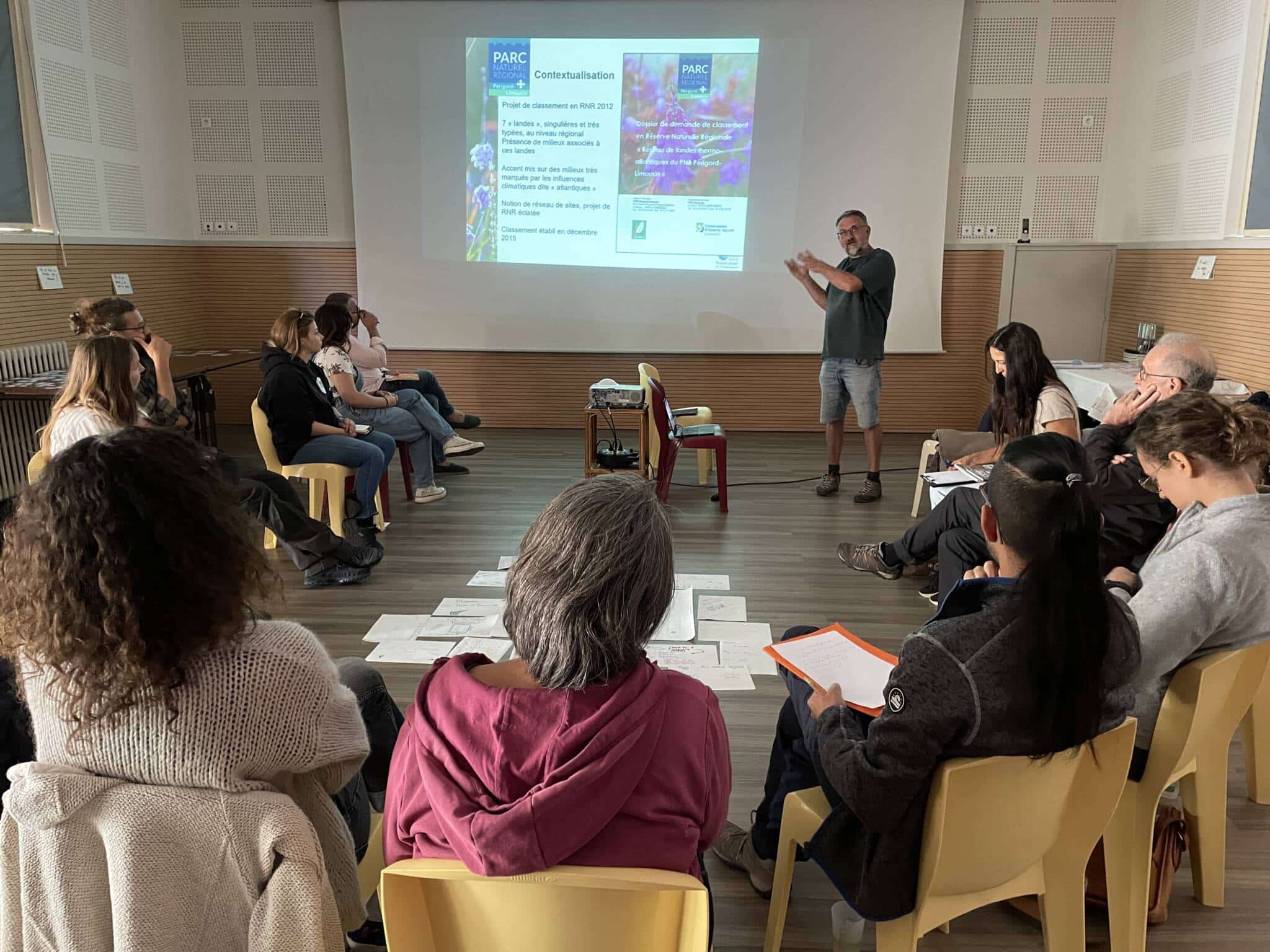
The regional nature reserve of the Atlantic heathland network of the Périgord-Limousin Regional Natural Park comprises seven heathlands among the most remarkable in the Limousin region . They contain various types of heathland (dry, heather, wet, serpentine) which constitute rare habitats in this area.
To discuss these heathlands, the Park has chosen to employ multiple approaches in its presentations. First, the landscape approach , which reminded participants that the forest cover that now characterizes the Park's territory is a relatively recent development. Then, the naturalist approach , of course, to highlight the unique nature of these open environments, whose existence is solely due to human activity. Finally, the cultural approach , to connect the two and remind everyone that the heathlands gave rise to agricultural practices, legends, and tools that have endured throughout history. While they now represent less than 1% of the Limousin region, their once much more pronounced presence is still reflected in local place names.
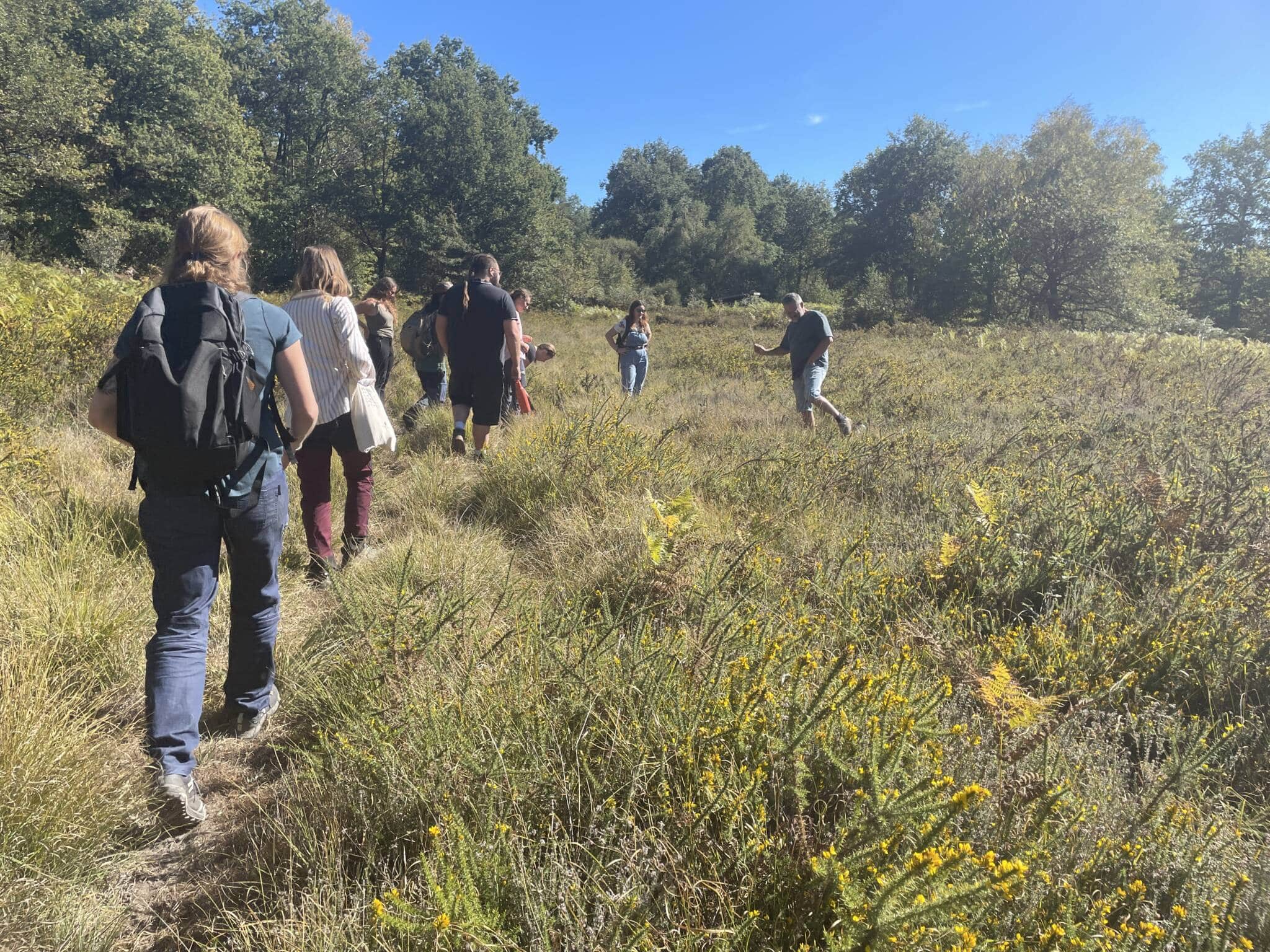
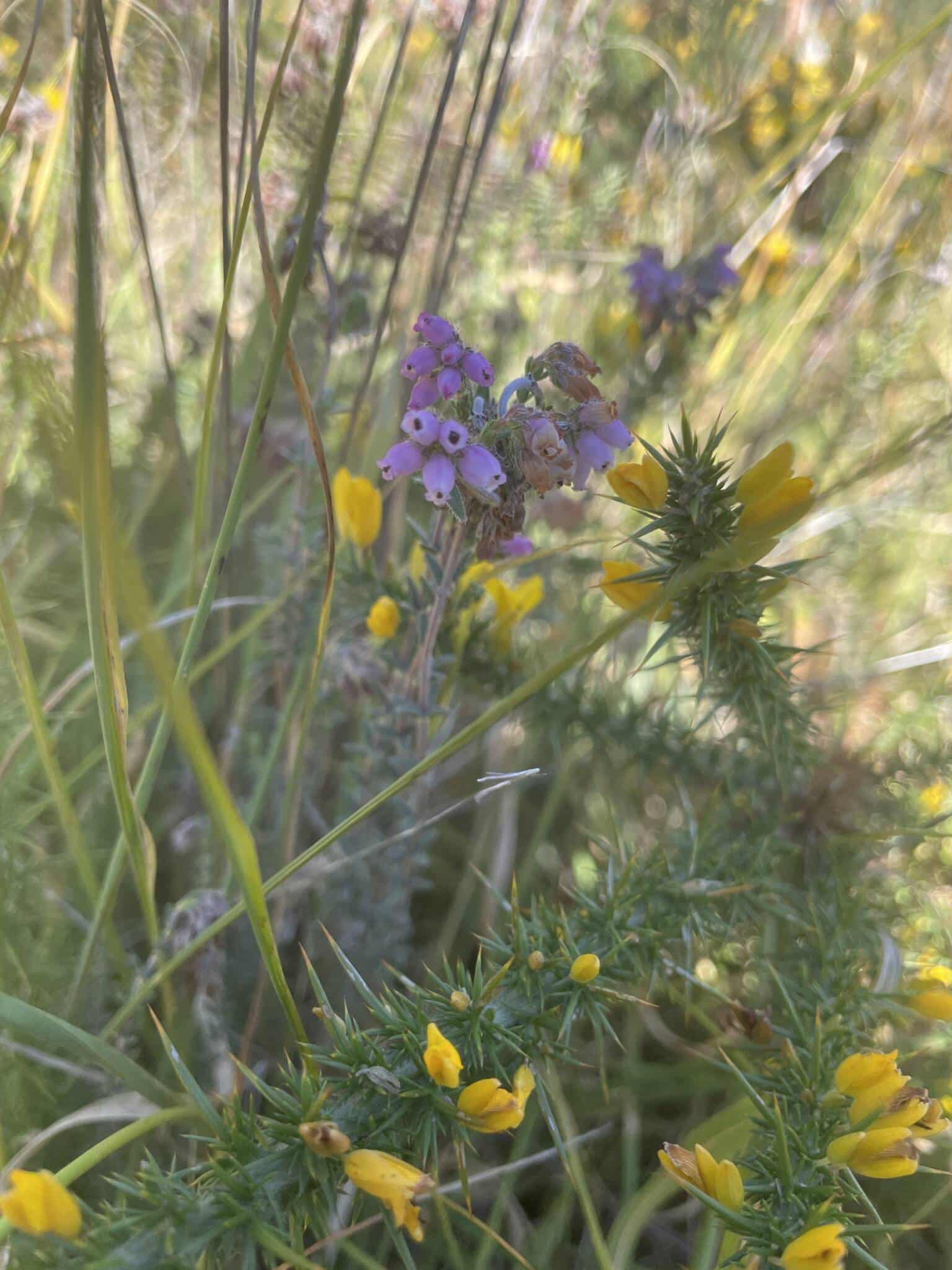
After a morning indoors, the facilitators headed out into the field to explore the Jarosses heath, one of the reserve's seven heathlands. Amidst dwarf gorse, cross-leaved heath, and clumps of purple moor grass, they were able to grasp the paradox of this "natural" environment and the complex challenges of its preservation. Heathlands require regular grazing or mowing to prevent them from becoming overgrown. Today, to compensate for the abandonment of these plots, mechanical intervention is often necessary to maintain open habitats and preserve the specific flora that thrives there. A balance must be struck between restoration efforts and avoiding disturbance to the species that inhabit these areas.
Through this day dedicated to the Atlantic heathland network, the Park highlighted one of its greatest assets: the diverse expertise of its team and the complementary nature of its partners, which allows for a cross-fertilization of perspectives and a comprehensive approach to complex issues. Participants praised the speakers' passion and left with a desire to explore the subject further.